Textured glass options have expanded considerably in recent years, giving designers and contractors more choices than ever before. Two patterns that appear frequently in project specifications are reeded glass vs fluted glass, and the two are often confused for the same product. While they share some visual similarities, the differences between them matter when it comes to sourcing, application, and final appearance.
How Reeded Glass vs Fluted Glass Differ in Structure
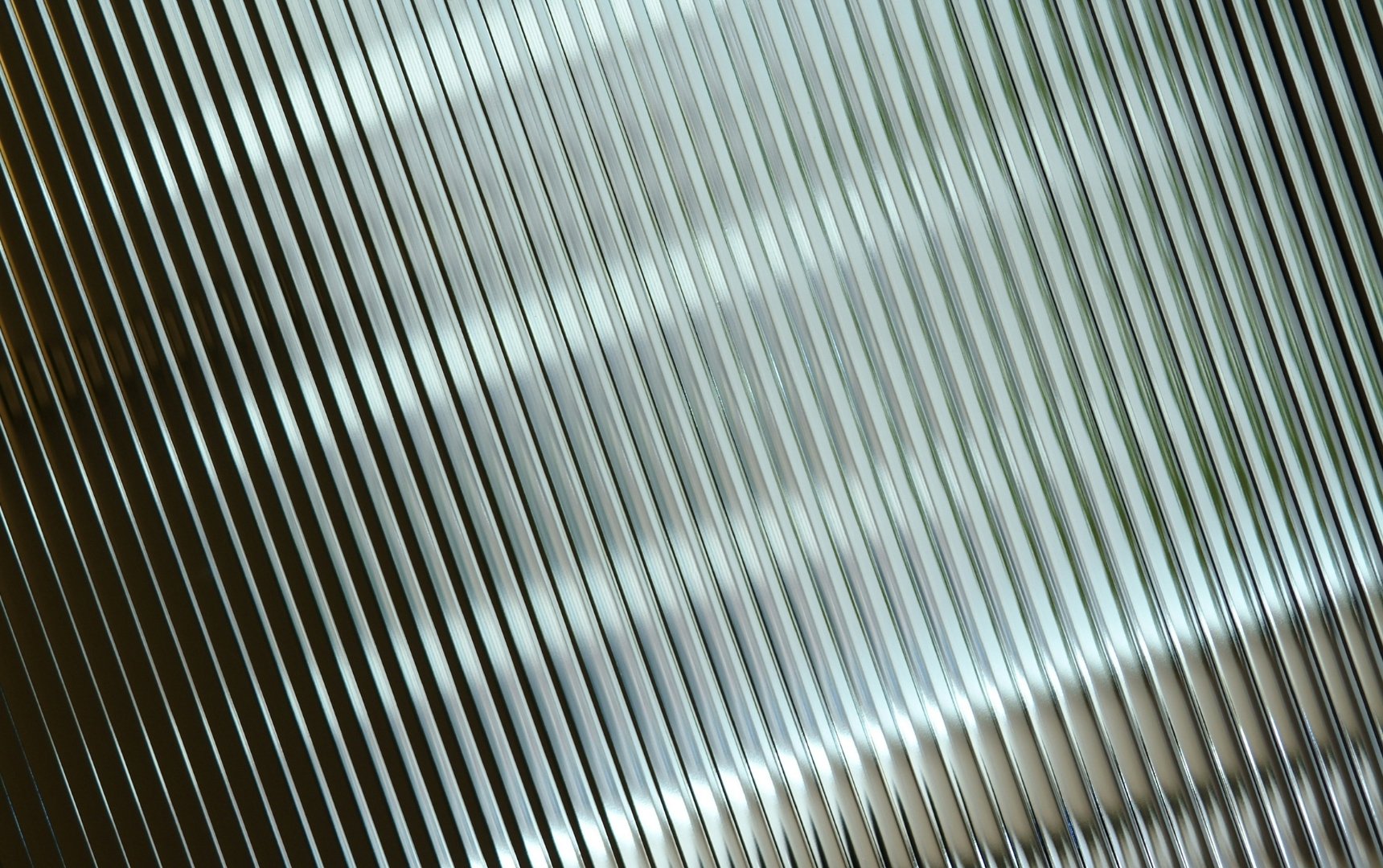
Reeded glass features fine, closely spaced parallel ridges that run along one surface of the pane. The ridges are relatively narrow and shallow, producing a subtle texture that softens light and obscures views without creating strong shadows or visual interruption. The overall effect is refined and consistent across the surface.
Fluted glass features wider, more pronounced channels that are deeper and farther apart than those found on reeded glass. These channels produce a bolder, more architectural effect with stronger light and shadow play across the surface. The depth of the flutes creates a more dramatic visual rhythm compared to the quieter texture of reeded glass.
The distinction between the two comes down to scale and depth. Reeded glass tends toward a softer, more delicate appearance, while fluted glass commands more visual attention. Both are produced through a rolling process during manufacturing, but the patterned rollers used for each are tooled differently to achieve their respective profiles.
How Each Pattern Handles Light
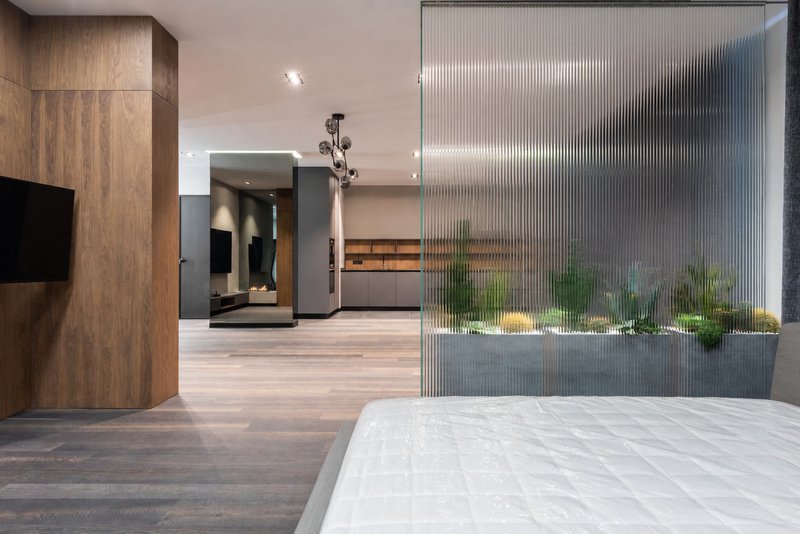
Light behavior is one of the most important functional differences between the two glass types. Reeded glass scatters light gently across its surface, producing a soft, diffused glow that minimizes glare while maintaining a sense of brightness in a space. The narrow ridges refract incoming light at subtle angles, creating a uniform appearance from most viewing distances.
Fluted glass interacts with light more dramatically. The deeper channels catch and redirect light at sharper angles, producing stronger highlights and shadows that shift as the light source changes throughout the day. This dynamic quality makes fluted glass a popular choice when visual movement and texture are priorities in a design.
Both glass types reduce transparency and limit direct sightlines, though neither provides complete opacity. The degree of obscuration depends on the depth and spacing of the pattern, with fluted glass generally offering slightly stronger visual interruption due to its more pronounced profile.
Design Applications for Each Glass Type
Reeded glass suits projects where a subtle background texture is preferred. It works well in sidelights, interior glazed doors, bathroom windows, and office partitions where privacy and light diffusion are needed without drawing significant visual attention to the glass itself. Its finer texture integrates easily with both contemporary and traditional design palettes.
Fluted glass tends to serve as a design feature in its own right. It appears frequently in retail storefronts, hospitality interiors, architectural partitions, and high-end residential projects where the glass is intended to make a visual statement. The bolder profile of fluted glass pairs well with minimalist or industrial design schemes where strong lines and material texture are emphasized.
In some projects, both glass types are used in the same building to serve different purposes. Reeded glass may handle privacy glazing in functional areas, while fluted glass is reserved for feature elements in lobbies or reception spaces. Treating them as complementary rather than interchangeable gives designers more flexibility in the overall material palette.
Specification Factors for Reeded Glass vs Fluted Glass
Sourcing reeded glass vs fluted glass requires separate inquiries with suppliers, as the two are distinct products with different availability profiles. Reeded glass is generally more widely stocked due to its longer history as a standard product in the industry. Fluted glass has grown in popularity recently and may carry longer lead times depending on region and order volume.

Both glass types can be fabricated into sealed units, though the textured surface must be oriented correctly during assembly. The pattern typically faces the interior cavity to protect it from external weathering and cleaning. Confirming orientation requirements with the sealed unit manufacturer before placing an order avoids costly errors at installation.
Safety treatment requirements apply to both glass types when they are specified in code-regulated locations. Tempering and laminating processes are compatible with both reeded and fluted glass, though these must be arranged prior to fabrication since neither product can be cut or modified after heat treatment. Reviewing the project's glazing schedule against applicable building codes before ordering ensures compliance from the start.
Reeded Glass vs Fluted Glass Sealed Units from Insul-Lite Manufacturing™
Insul-Lite Manufacturing™ offers custom sealed units built with decorative glass options, including both reeded and fluted glass. We work with clients to identify the right IG glass unit build for each application, whether the project calls for the subtle texture of reeded glass or the bold profile of fluted glass. Our team is ready to help move specifications from concept to finished sealed unit.
Contact us today to get a quote on reeded or fluted glass sealed units for your next project.